It’s early summer, and we have an abundance of rhubarb. We also have kilograms of Elderberries in the freezer from last year. This is a perfect opportunity to make Rhubarb and Elderberry fruit leather.
This recipe is based on my Rhubarb leather recipe, but uses elderberry juice to give it a smoother and, not surprisingly, more berry like flavour.
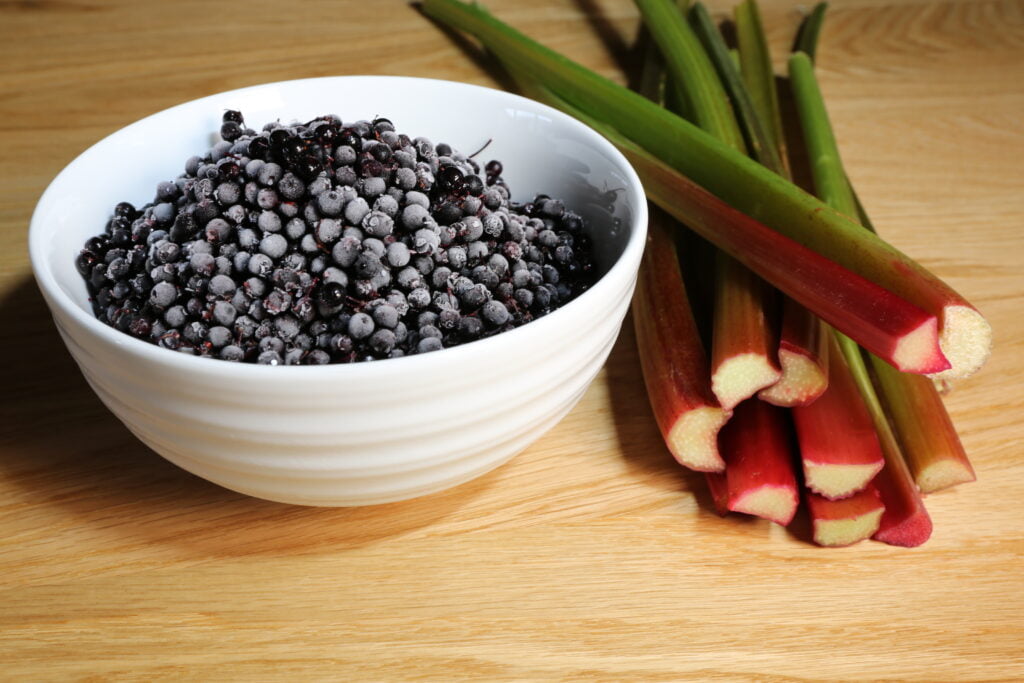
The ingredient list here is simple:
Rhubarb, Elderberries, Honey, Lemon Juice and Vanilla Extract.
The Recipe
This recipe will make two trays of approximately 35cm x 25cm. That will vary a little according to how thickly it is spread.
- 500g Rhubarb stalks
- 400g Elderberries
- 300g Honey
- Juice of half a lemon
- 1/4 teaspoon Vanilla extract
- 50 ml of water
Prepare the Elderberries
I’m not a big fan of Elderberry seeds in fruit leather. I find them too coarse, even when well blended. If you do decide to leave them in, then it will add significantly to the quantity, and as they are not sweet, you would need to increase the honey. They are quite large and take up about half of the berry volume, so I would increase the honey content by a third.
I do leave a proportion of the seeds in Elderberry jam, but in something like fruit leather, I just use the juice / liquid. This is fairly easy to do.
To prepare the Elderberries, they need to be boiled. The berries have toxins (cyanogenic glycosides) in them which can be broken down by cooking. It appears there are also more toxins in the seeds than the berry flesh, so removing the seeds can also perhaps help with digestion.
Make sure all of the stem is removed from the berries, and boil them in a pot for 10 minutes with 50 ml of water. This will break down and soften the berry flesh and skins.
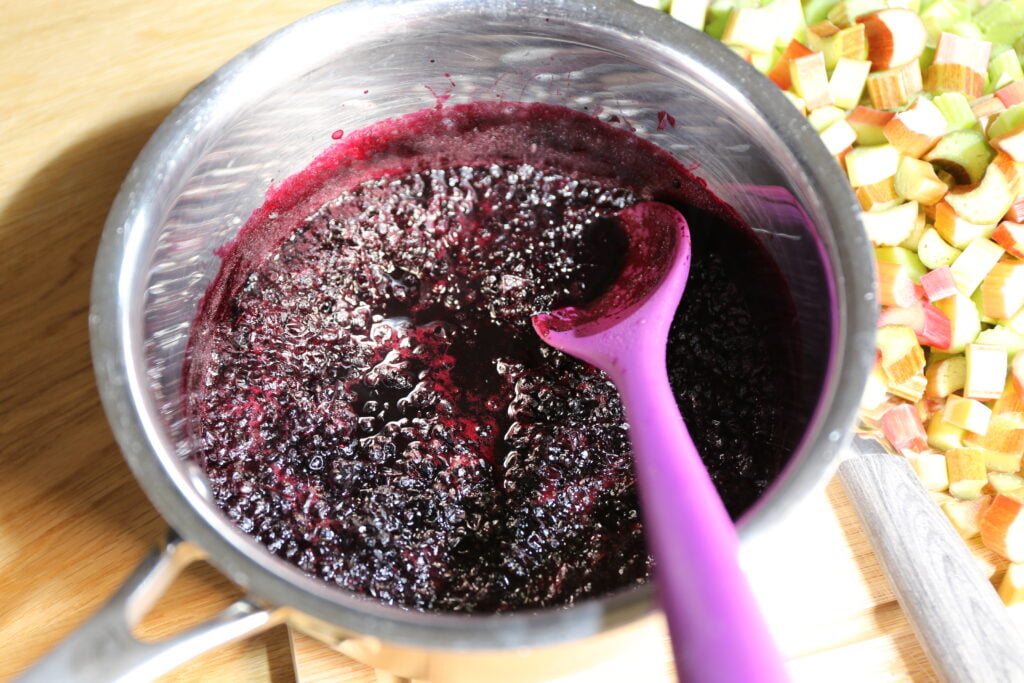
After 10 minutes boil, pour the mix through a sieve to collect the juice. I then press the flesh through with a silicon spoon or spatula for a while to get as much berry flesh as possible.
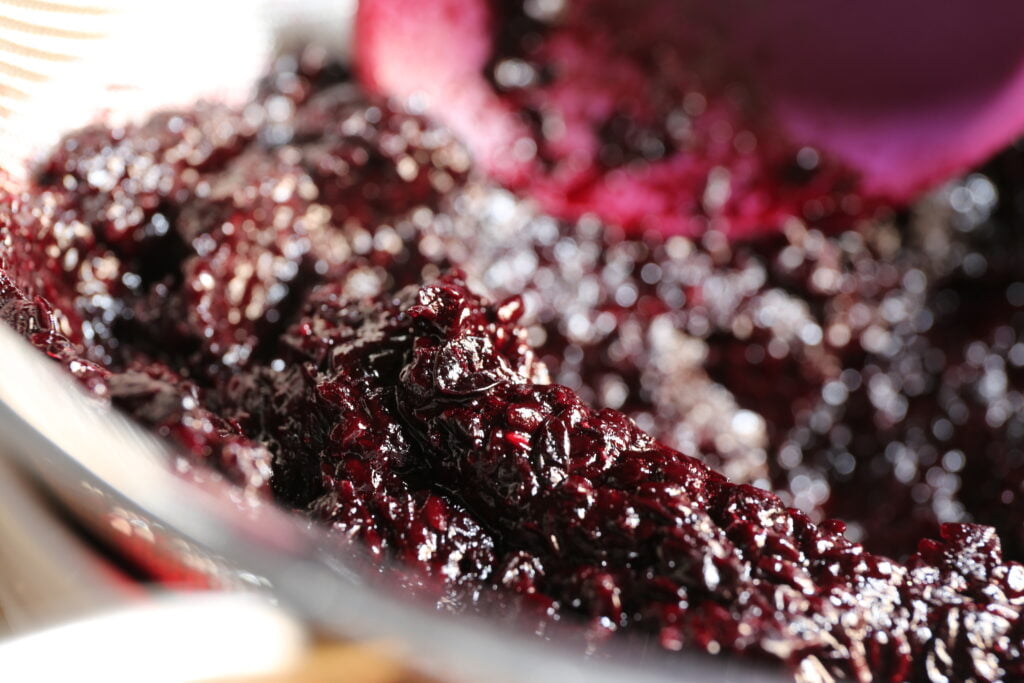
Place the berry liquid aside, ready for the Rhubarb.
Chop and boil the rhubarb
Simply rough cut the rhubarb.
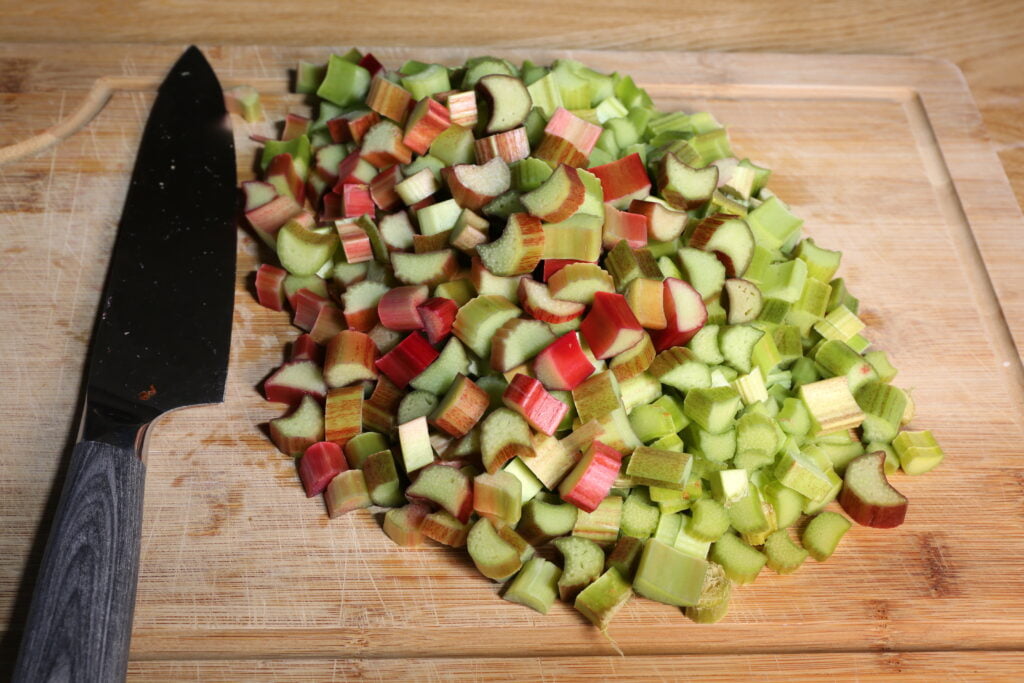
Then boil the rhubarb with the elderberry liquid and lemon juice for about ten minutes (or less). The idea is to just soften the rhubarb, and to try to keep as much nutrition as we can. The less boiling the better here.
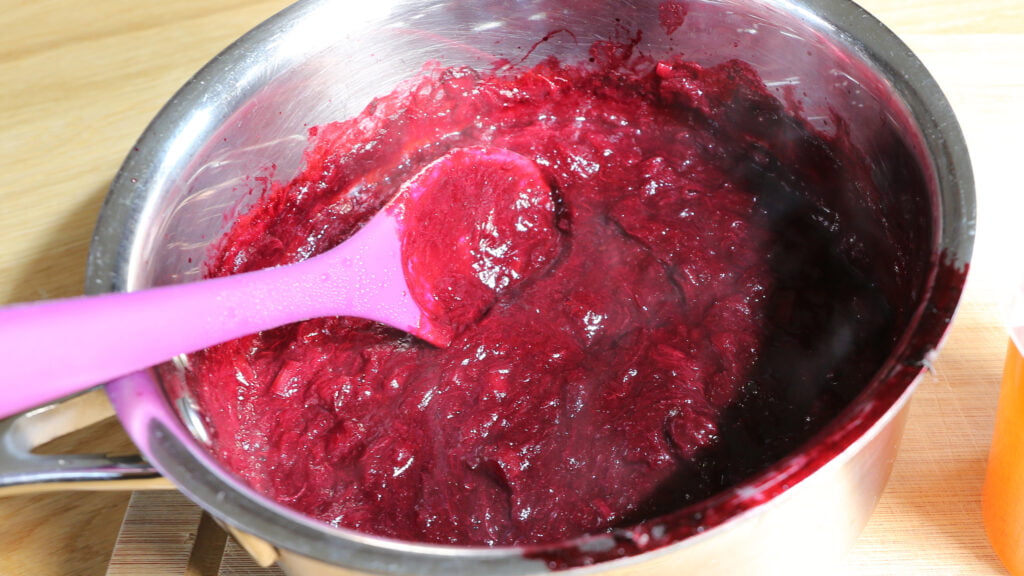
Blend away….
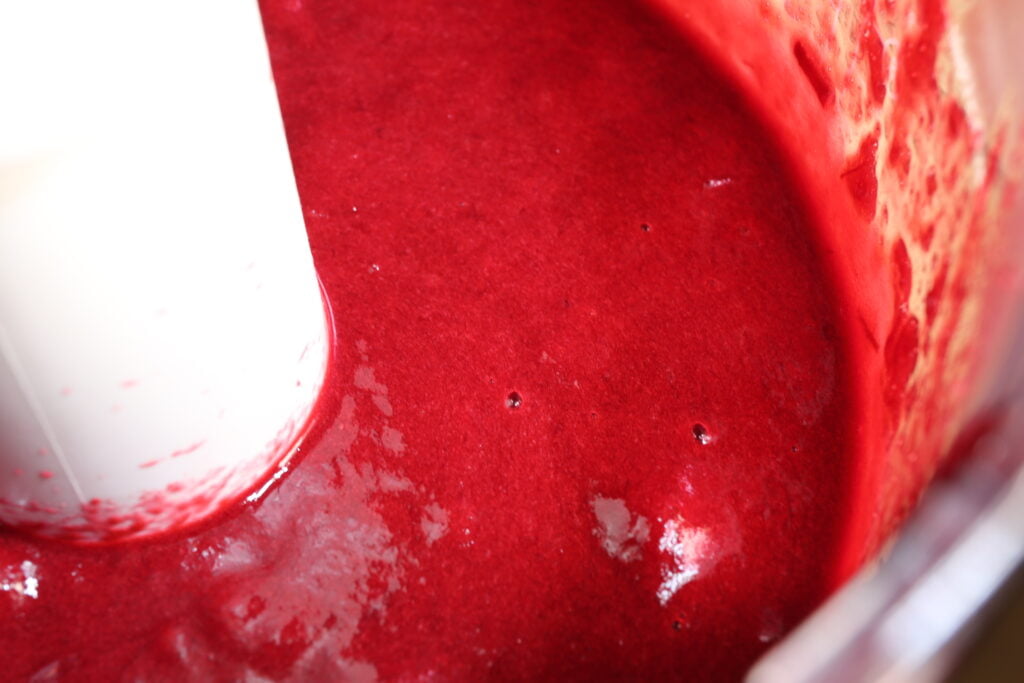
With the mixture now cooled slightly, pour into a blender and add the honey. Once again, I’m trying to keep nutrition, so not adding the honey hot, possibly helps a little here. Also add the vanilla extract as well, and blend until smooth.
I suggest not over blending, as it adds more and more air, which then makes the final product more pink and also slightly ‘foam like’ in texture.
Spread the fruit leather and dehydrate
Lay some baking paper on a tray, and spread the mixture thinly over the paper. The thickness is up to you here. The thinner it is, the quicker it will dry out. I spread relatively thick, and aim for about 2-3 mm, and I wouldn’t go much thicker.
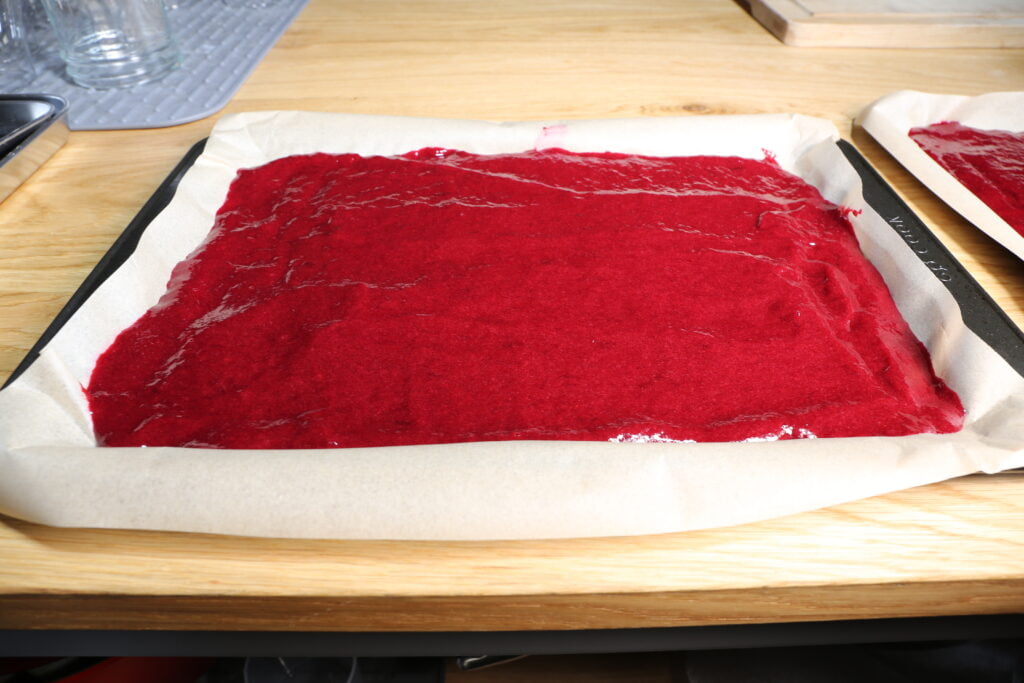
It’s better if you can get it an even thickness, as it will dehydrate more evenly. However, as you can see from my efforts above, it really doesn’t matter. This one turned out fine.
Drying the fruit leather
If you have a dehydrator, then you know how long you will need to dry this. We don’t have our dehydrator yet, so I use the oven. We have a fan assisted oven, and I set it at 40°-50°c / 104°-122°f. At this temperature, it takes between 10 – 12 hours to reach the right moisture level.
Once dry, the baking paper easily peels from the back. Then roll up the leather, and cut into strips.
If dried to a low enough moisture content, this should store in an airtight container for a good few months. If you wish to store it for an extended period, I would choose to freeze it in an airtight bag.
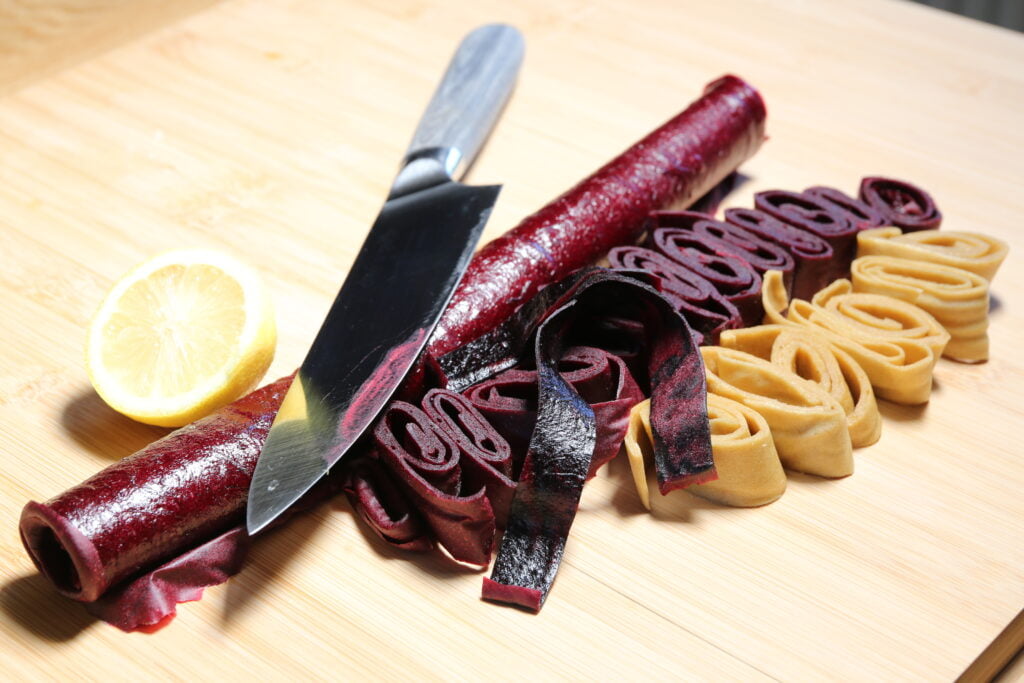
The above picture has some of my Rhubarb only leather. We get very little red on our rhubarb, so it comes out a light green colour. The Elderberry addition really makes it look so much richer and delicious. It tastes that way as well.. 😊